Hemoglobin Assays and Controls
Glycohemoglobin Controls, Normal & Elevated
The normal level glycohemoglobin product is a stabilized oxy
hemoglobin control
with values less than 6.0%. The elevated control has a
glycohemoglobin level
between 8% and 13%. The values are assigned by point of care
instrumentation. This product performs very well in weak cation
exchange HPLC.
Stability is excellent—– at least 10 days after reconstitution, 21 days
frozen
after reconstitution and for two years as a lyophilized powder.
The reconstituted hemoglobin concentration is 12-16 gm/dl. - HC-101 6X0.5 ml normal controls
- HC-101EL 6X0.5 ml elevated controls
Variant Hemoglobin Control, AFSC & NAFSC
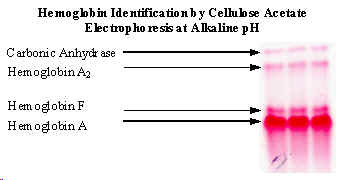
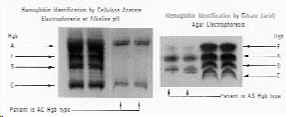
ACS’s Variant Hemoglobin Control, AFSC and NAFSC are useful controls for any
electrophoresis screening HPLC or isoelectric focusing procedure where variant hemoglobins are expected. The stabilized
oxyhemoglobin based AFSC control has values for A, F, S, and C of approximately 40%, 25%,
20% and 15% respectively and the stabilized, oxyhemoglobin based NAFSC control has values
for N-Baltimore, A, F,S, and C of approximately 34%, 44%, 6%, 6% and 9% respectively. The
products are stable for 10 days after reconstitution, for 21 days frozen after
reconstitution and for two years unreconstituted and refrigerated.
- HC-102 6X0.5 ml AFSC Control
- HC-102N 6X0.5 ml NAFSC Control
|
 |
Variant Hemoglobin Control, AF
ACS’s Variant Hemoglobin Control, AF is useful in laboratories doing hemoglobin
electrophoresis screening of newborns. The control performs on alkaline
electrophoresis, acid citrate agar media, HPLC, and isoelectric focusing procedures. The stabilized, oxyhemoglobin based Variant
Hemoglobin Control, AF has values for A and F of about 60% and 40%, respectively. The
stability is assured for at least 10 days reconstituted, 21 days frozen after
reconstitution and the control has a two year refrigerated shelf life when
unreconstituted.
Variant Hemoglobin Control, AS
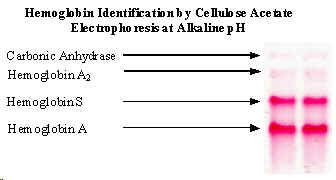
ACS’s Variant Hemoglobin Control, AS is useful in laboratory
screenings for
sickle cell trait and disease. The control performs on alkaline
electrophoresis, acid citrate agar media, HPLC, and isoelectric
focusing procedures. The stabilized, oxyhemoglobin based Variant
Hemoglobin Control,
AS has values for A and S of about 60% and 40% respectively. Stability
is assured for at
least 10 days reconstituted, 21 days frozen after reconstitution and
the control has a two
year refrigerated shelf life when unreconstituted.
Variant Hemoglobin Control, AC
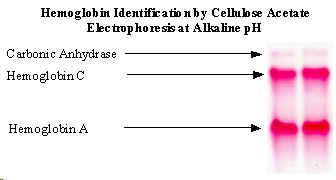
ACS’s Variant Hemoglobin Control, AC is useful in confirming the presence of
variant hemoglobin C in populations where C and E occur and in the presence of other
hemoglobins such as elevated hemoglobin A2. The control performs on alkaline
electrophoresis, acid citrate agar media, HPLC, and isoelectric focusing procedures. The stabilized, oxyhemoglobin based
Variant Hemoglobin Control, AC has values for A and C of about 60% and 40% respectively.
Stability is assured for at least 10 days reconstituted, 21 days frozen after
reconstitution and the control has a two year refrigerated shelf life when
unreconstituted.
Hemoglobin A2 Control, Normal & Elevated
The measurement of hemoglobin A2 is important in
the diagnosis of thalessemia. The most commonly used diagnostic procedures are alkaline
cellulose electrophoresis and column chromatography. ACS’s normal and elevated A2
controls are specifically prepared to be useful in both procedures. The total hemoglobin
is adjusted to about 4.0 gm/dl and the normal control contains from 1.5%-2.5% A2,
while the elevated contains 3.5% to 5.0%. The reconstituted controls can be applied
directly in either procedure without further dilution. For procedures which measure A2
in the presence of hemoglobin S, please inquire. The bulk product may also be order OEM to
dispense and lyophilized on location (minimum 1 liter).
- HC-111 6X0.5 ml normal
- HC-112 6X0.5 ml elevated
Variant Hemoglobin Control, AE
Hemoglobin E is a fairly rare hemoglobinopathy in the United States. However, it
occurs in the 30– 50 million person range in Asia, mainly among southeast Asian
peoples. Therefore, a high incidence of hemoglobin E is to be expected among such
populations both in America and in Europe. Because of the overlap between hemoglobin E and
beta thalassemia, there may be severe clinical symptoms amongst heterozygous E patients
due to the combined hemoglobinopathies (E & beta thalassemia). Due to the
electrophoresis mobility properties, structural stability and other physical
characteristics of these hemoglobins, good technique and appropriate controls are
essential in the correct identification of these hemoglobinopathies. Care also should be
taken to properly identify and quantitate hemoglobin A2 when thalassemia is
suspected. ACS makes a heterozygous quality control sample. The donor AE has been
carefully tested and properly identified to assure analysts that a proper E hemoglobin in
present.
Variant Hemoglobin Controls, AFC & AFS
ACS’s Variant Hemoglobin Control, AFC is useful in confirming the presence of
variant hemoglobin C in populations where C and E occur and in the presence of other
hemoglobins such as elevated hemoglobin A2. ACS’s Variant Hemoglobin
Control, AFS is useful in laboratories screening for sickle cell trait and disease. The control performs on alkaline
electrophoresis, acid citrate agar media, HPLC, and isoelectric focusing procedures. AFC and
AFS are stabilized, oxyhemoglobin based Variant Hemoglobin Controls. Stability is assured
for at least 10 days reconstituted, 21 days frozen after reconstitution and the control
has a two year refrigerated shelf life when unreconstituted.
- HC-118 AFS 6X0.5 ml
- HC-119 AFC 6X0.5 ml
Variant Hemoglobin Control, AD
Although both hemoglobin D disease and trait hemoglobin AD are extremely rare, the
importance of using controls is highlighted by the fact that hemoglobin S and hemoglobin D
migrate similarly upon alkaline (pH 8.6) electrophoresis. This is so because both
hemoglobin S and D arise from single, similarly charged amino acid substitutions on the
beta-globin chain. The substitution is at position six in hemoglobin S and 121 for
hemoglobin D. Hemoglobin D doesn’t sickle using the standard laboratory techniques
but does have a higher than normal oxygen affinity. Using selective laboratory techniques
and controls allows the correct diagnosis of hemoglobin D trait or disease.
Variant Hemoglobin Controls, Fractions
ACS’s Variant Hemoglobin Control, Fractions contains one vial each of AS, AC,
AF and A2 stabilized, oxyhemoglobin based Variant Hemoglobin Controls. AC helps
to confirm the presence of variant hemoglobin C in populations where C and E occur. The
measurement of A2
is important in the diagnosis of thalessemia. AS is useful in
laboratories screening for sickle cell trait and disease. AF aids
laboratories involved in
the screening of newborns. The control performs on alkaline
electrophoresis, acid citrate agar media, HPLC, and isoelectric
focusing procedures. Stability is assured for at least 10 days
reconstituted, 21 days
frozen after reconstitution and the control has a two year refrigerated
shelf life when
unreconstituted. - HC-121 AS 1X0.5 ml, AF 1X0.5 ml, AC
1X0.5 ml, A2 1X0.5 ml
Quik-Sep® Hemoglobin F Assay Alkali Denaturation
ACS Quik-Sep® Hemoglobin F Assay is designed for accurate quantitation of adult
hemoglobin F in ranges from 2% to 40% by alkali denaturation. The ACS Hemoglobin Assay is
based on the ability of hemoglobin F to resist denaturation under alkaline conditions.
Most hemoglobins can be denatured at a base pH and then precipitated with ammonium
sulfate. Fetal hemoglobin remains soluble and can be readily quantified using a standard
laboratory spectrophotometer. Accurate measurement can be useful in helping the physician
diagnose certain hemoglobinopathies and thalassemias. The Quik-Sep® Kit contains
potassium cyanide, cyanmethemoglobin (Drabkin’s reagent), sodium hydroxide, ammonium
sulfate and 50 filter columns.
- HK-1050 50 tests Contains: Potassium Cyanide (2%),
Cyanmethemoglobin (Drabkin’s) Reagent, Sodium Hydroxide, Ammonium Sulfate, Filter
Columns
Variant Hemoglobin Control, F Normal & Elevated
ACS’s Variant Hemoglobin Control, F is an useful control for alkali
denaturation hemoglobin screening. The normal control has an F
hemoglobin approximately
that of normal patients <2%, while the elevated control has an F
hemoglobin level of
approximately 8.5%. The control is designed for use on the ACS
Quik-Sep® Hemoglobin Assay
Kit (alkali denaturation) but the control performs on alkaline
electrophoresis, acid citrate agar media, HPLC, and isoelectric
focusing procedures. Stability is assured for at least 10 days.
Reconstituted, 21 days frozen
after reconstitution and for two years as a lyophilized powder.
- HC-106 6X0.5 ml
- HC-106EL 6X0.5 ml
|
 |
Hemoglobin, Galactose-1-Phosphate Uridyl Transferase
Control, Normal & Depressed
ACS’s Gal-1-PUT Control is hemoglobin based and useful in screening and
quantitative assays used to aid the diagnosis of galactosssemia. The Gal-1-PUT Control
contains Gal-1-PUT in a stabilized oxyhemoglobin base with either normal or depressed
levels of enzyme in normal levels of hemoglobin. Stability is assured for at least 10 days
when the control is reconstituted, 21 days frozen after reconstitution and for two years
when refrigerated and unreconstituted. Approved OEM customers can order quantities
(minimum of 1 liter ) to dispense and lyophilized at their own facilities.
- HC-107 6X0.5 ml Normal Controls
- HC-107DE 6X0.5 ml Depressed Controls
- Both are available OEM as a bulk liquid
Hemoglobin, Erythro-6-Dehydrogenase: Glucose-6-Phosphate
Dehydrogenase Controls, Normal, Intermediate and Depressed
ACS’s Hemoglobin based G-6-PDH Control is useful in tests designed to detect
G-6-PDH deficiencies and in the management of drug sensitivities related to this
deficiency. The controls, normal, intermediate and depressed, consist of stabilized
oxyhemoglobin bases and adjusted levels of G-6-PDH. All three controls perform remarkably
well in kinetic, visual or fluorescent procedures. Stability is at least 5 days
reconstituted, 21 days frozen after reconstitution and two years as a lyophilized powder.
The bulk product is available to OEM customers (minimum quantity: 1 liter) to be dispensed
and lyophilized in house.
- HC-108 6X0.5 ml Normal Controls
- HC-108IN 6X0.5 ml Intermediate Controls
- HC-108DE 6X0.5 ml Depressed Controls
- All are available OEM as a bulk liquid
Hemoglobin Control, Total
ACS’s Total Hemoglobin Control is specifically designed to test the efficacy
of hemoglobin tests such as cyanmethemoglobin. These reagents frequently loose their
potency and yield inaccurate values as they age. Using a pre-prepared standard control
assay will not detect this problem if the hemoglobin is in the measured chemical form
before it is added to the reagent. ACS’s Total Hemoglobin Control fully checks assays
reagents since it is composed of nearly all oxyhemoglobin. Values can be adjusted to range
from very low to well above normal expected values. The higher concentration material can
be used as a linearity verifier.
- HC-110 6X3.0 Total Hemoglobin Controls Normal
- HC-110LIN 6X3.0 Linearity Total Hemoglobin Controls
- Total Hemoglobin is available as an OEM bulk liquid
Retail Prices
|